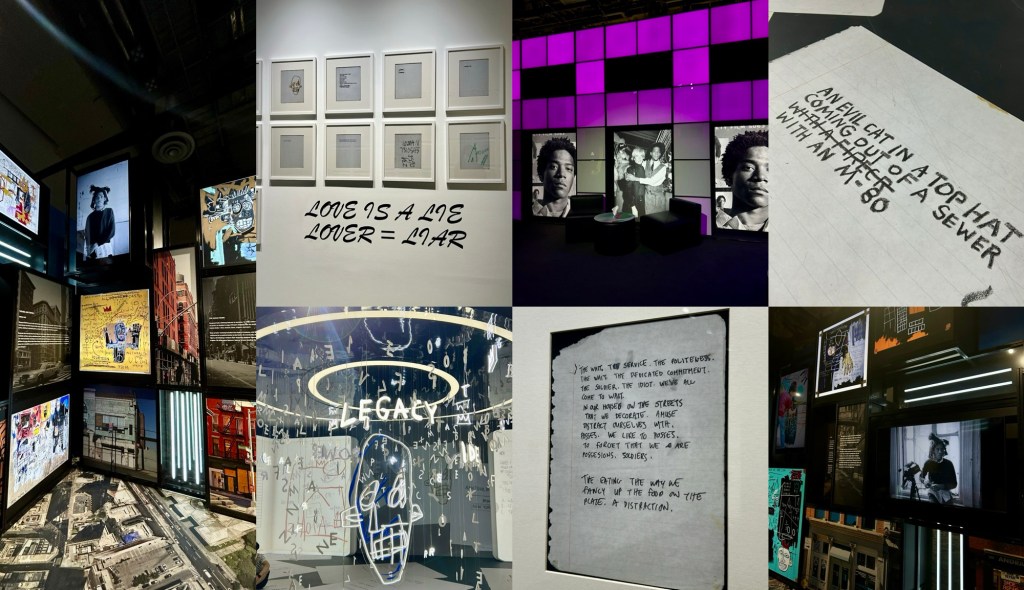
Walking into the gallery dedicated to Jean-Michel Basquiat felt like stepping into the mind of a creative icon. Known for his raw, unfiltered expressions and powerful use of text and imagery, Basquiat remains one of the most celebrated artists of the 20th century. The exhibition was more than just a collection of his work—it was an intimate look at the layers of his legacy, immortalized through his notebooks, sketches, and bold statements.
A Legacy Intertwined with the Legends of the ’80s
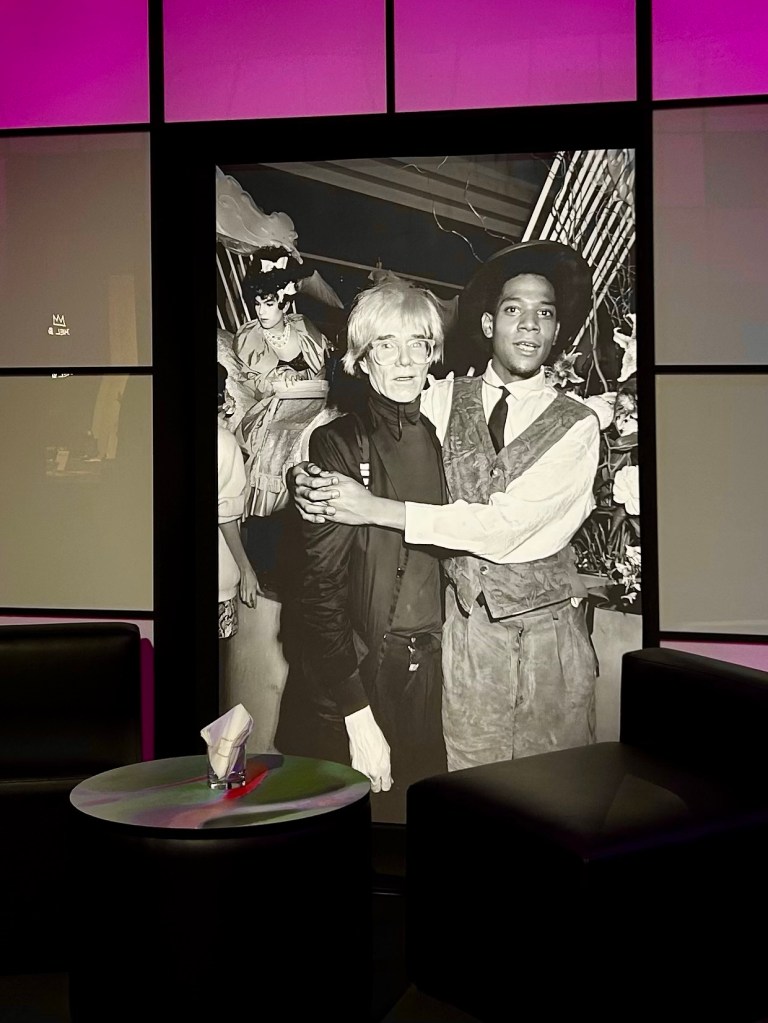
Basquiat’s rise to fame in the 1980s was not just about his art but also his vibrant connections with cultural icons. His friendship and collaboration with Andy Warhol was a pivotal chapter in his career. Warhol, a pop art giant, not only admired Basquiat’s talent but also worked with him on a series of joint pieces that challenged conventions. Together, they became symbols of the ever-changing art world, where graffiti met pop, and the underground collided with the mainstream.
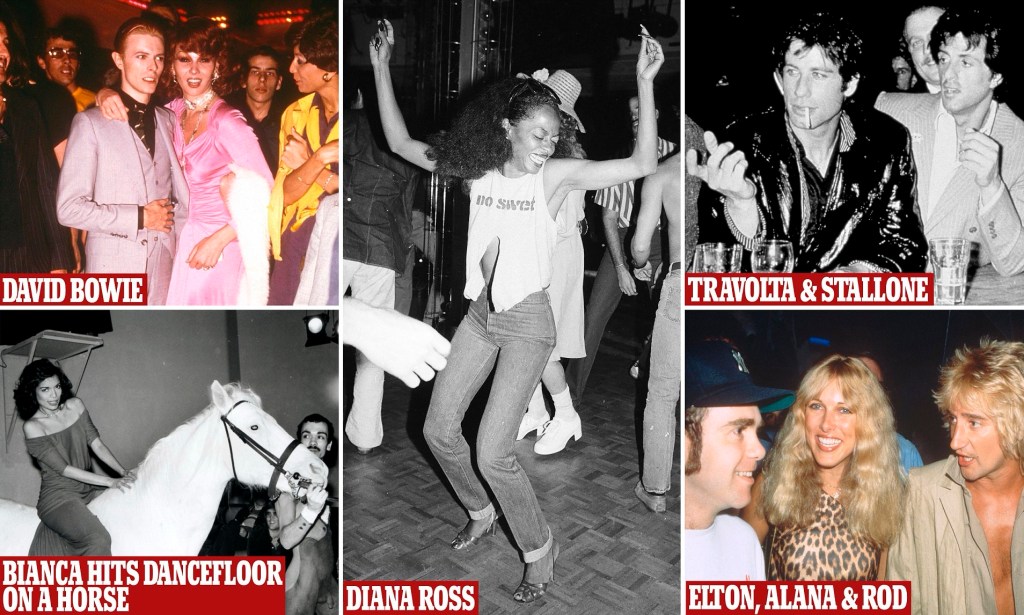
Studio 54, the legendary nightclub, was another significant backdrop of the time. It wasn’t just a place for parties, it was where art, music, and fashion converged. Basquiat was part of this electrifying scene, rubbing shoulders with the likes of Keith Haring, Madonna, and Grace Jones. This era wasn’t merely about nightlife; it was about breaking barriers and pushing the boundaries of creativity.
The Art On Display
1. The Notebooks
One of the standout elements of the exhibition was Basquiat’s notebooks. These weren’t merely collections of doodles; they were windows into his creative process. Filled with poetic musings, fragmented thoughts, and sketches, the pages revealed a deeply personal side of the artist.
His words, such as “LOVE IS A LIE” and “LOVER = LIAR,” were stark yet thought-provoking, embodying his raw perspective on relationships and society.
2. Visual Powerhouses
From bold, graphic portraits to intricate collages of text and image, Basquiat’s pieces commanded attention. His use of repetition, powerful phrases, and vivid color palettes created a sense of urgency, almost as if the artist were trying to capture the chaos of his time.
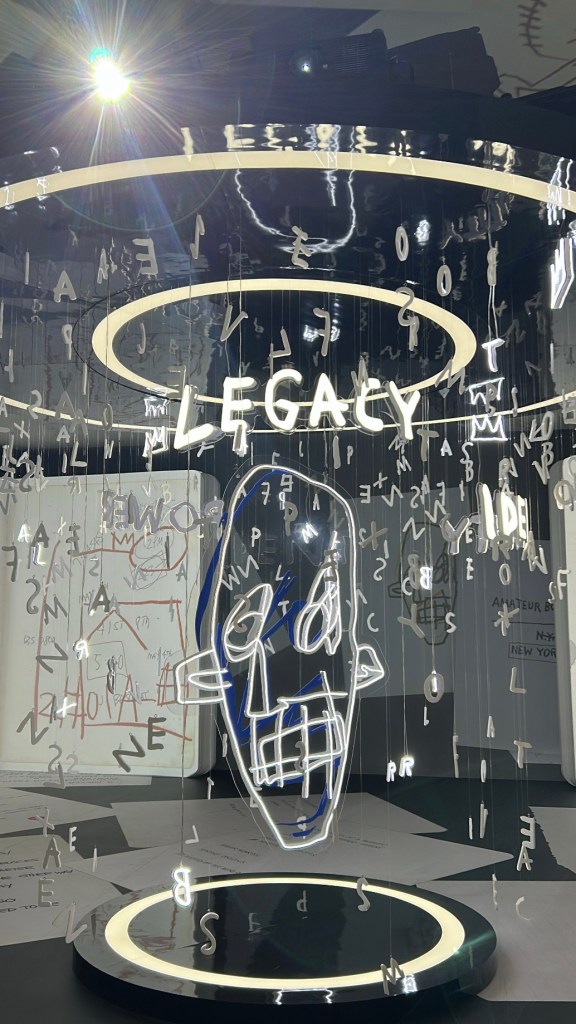
One of the most striking installations was a suspended neon-lit piece featuring his iconic crown motif, emphasizing his place as a king of contemporary art.
3. Fragments of Reality
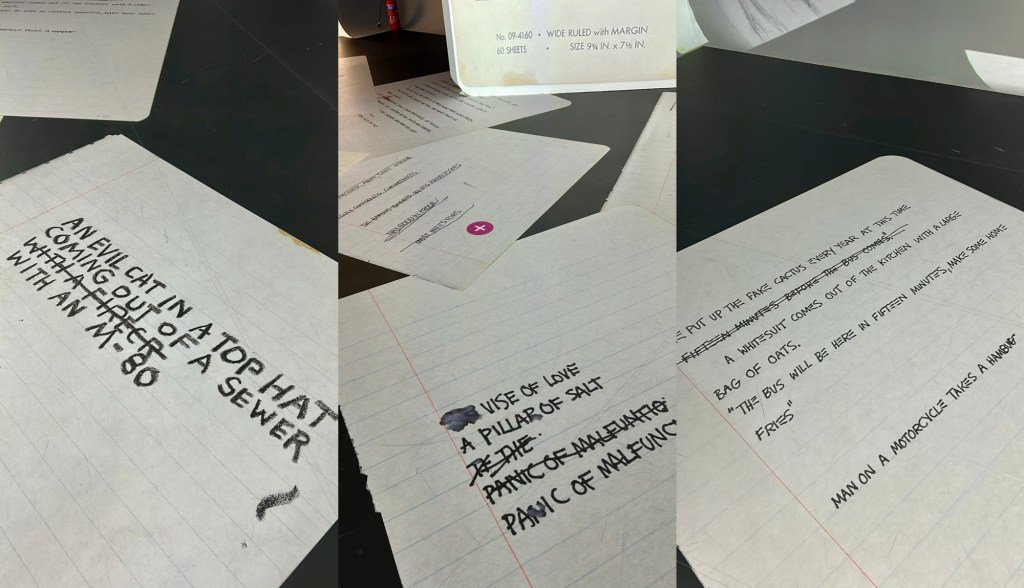
The scribbled notes and sketches displayed on everyday notebook paper felt intimate and relatable. Lines like “Man on a motorcycle takes a hamburger” or “The eating… a distraction” made me pause, reflecting on how Basquiat could turn even mundane observations into profound commentary. His ability to transform the ordinary into art is a testament to his brilliance.
The Warhol-Basquiat Connection
Basquiat and Warhol’s partnership was as dynamic as it was complex. Their collaborations fused Basquiat’s raw energy with Warhol’s polished pop aesthetic, resulting in works that were often provocative and sometimes misunderstood.
Warhol’s influence helped Basquiat navigate the art world’s commercial side, while Basquiat infused Warhol’s practice with a sense of urgency and grit. Together, they blurred the lines between high art and street culture.
Reflecting on Basquiat
What struck me most about this exhibition was its rawness. There were no polished edges or over-interpretations, just Basquiat’s voice, unapologetic and unfiltered.
The juxtaposition of his powerful visual language and fragmented written thoughts reminded me of the vulnerability and strength that coexisted in his work. It’s rare to see an artist’s mind laid bare in this way.
Studio 54 and Its Impact
Studio 54 wasn’t just a playground for Basquiat and his contemporaries; it was a microcosm of the cultural revolution of the time. It provided a space where artists, musicians, and fashion icons could connect and inspire each other.
The pulsating energy of the club undoubtedly influenced Basquiat’s vibrant, chaotic compositions, reflecting the eclectic mix of creativity and rebellion that defined the era.
Why Basquiat Still Matters
Basquiat’s art was a reflection of his time but also a critique of it. He tackled issues of race, inequality, and identity with a boldness that was ahead of its time. This exhibition serves as a reminder that art isn’t just about aesthetics, it’s about challenging the status quo, sparking conversation, and leaving a legacy that inspires future generations.
For anyone who hasn’t yet explored Basquiat’s work, this exhibition is a must-see. It’s a chance to not just view art but to feel it, question it, and carry its message forward.
 Chic Mirage